Just as individuals form initial impressions, buildings likewise shape the collective consciousness of their surroundings. As societal attitudes become more inclusive, buildings are set to embody a wider array of aesthetics, enhancing self-expression for both people and spaces.…
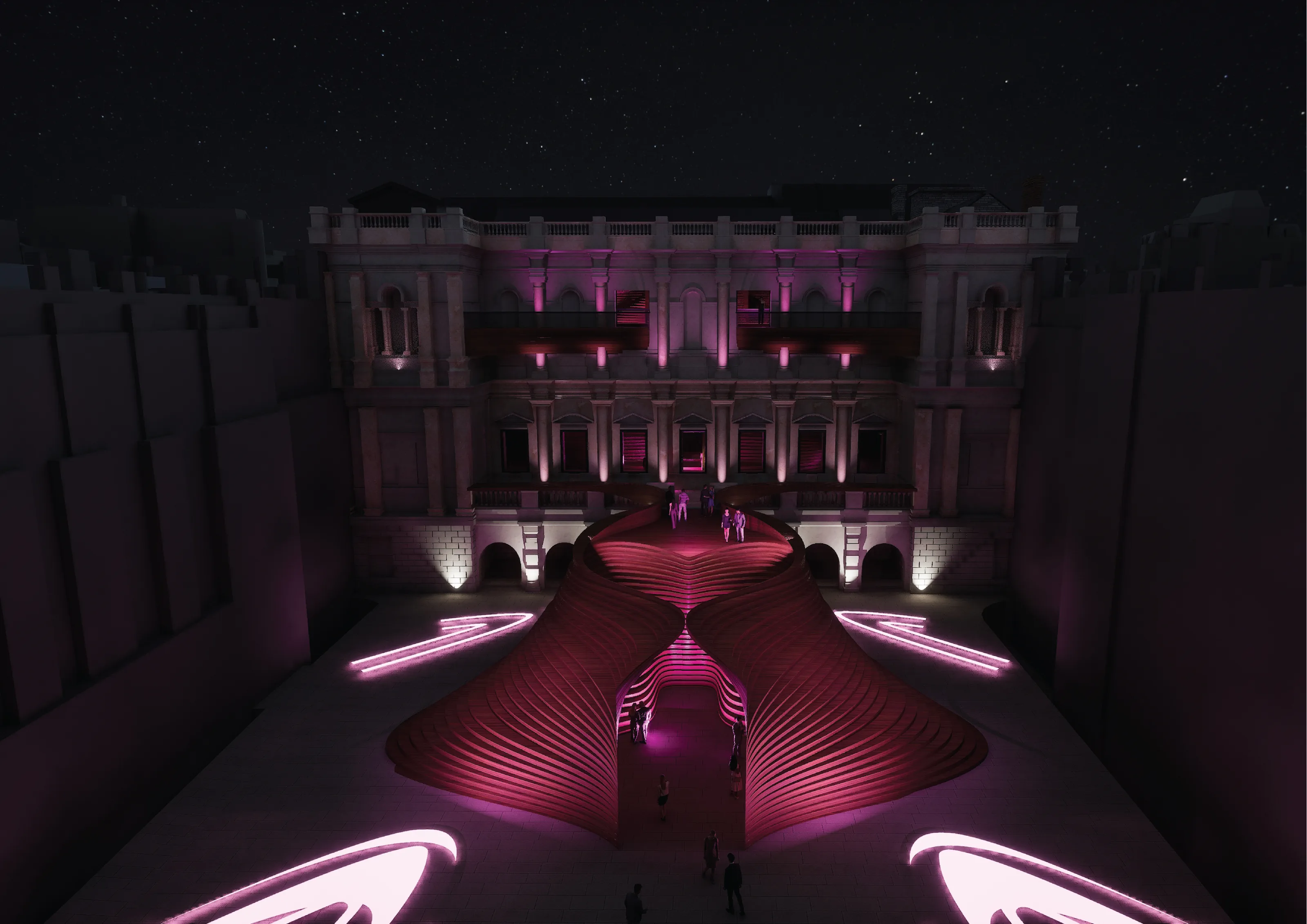
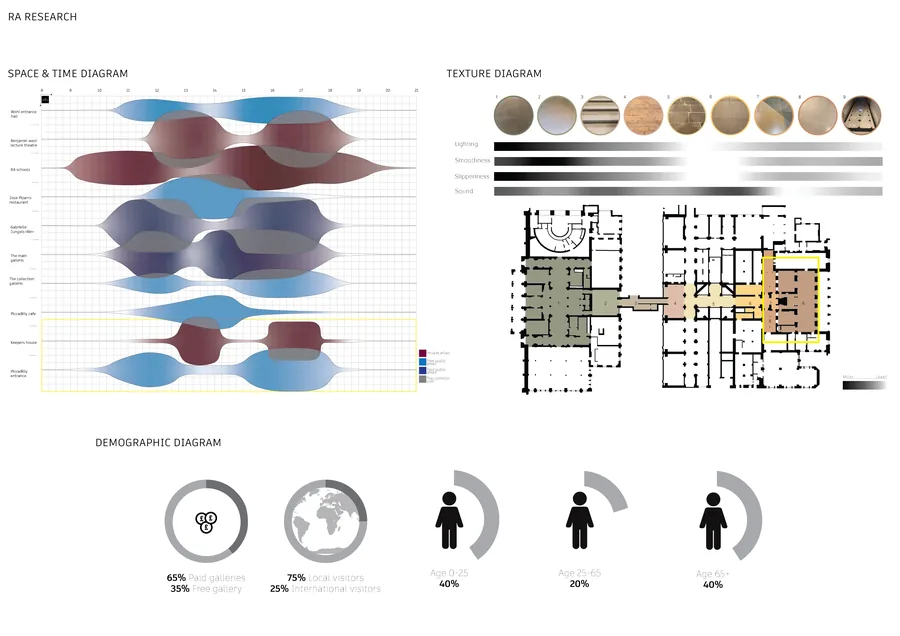
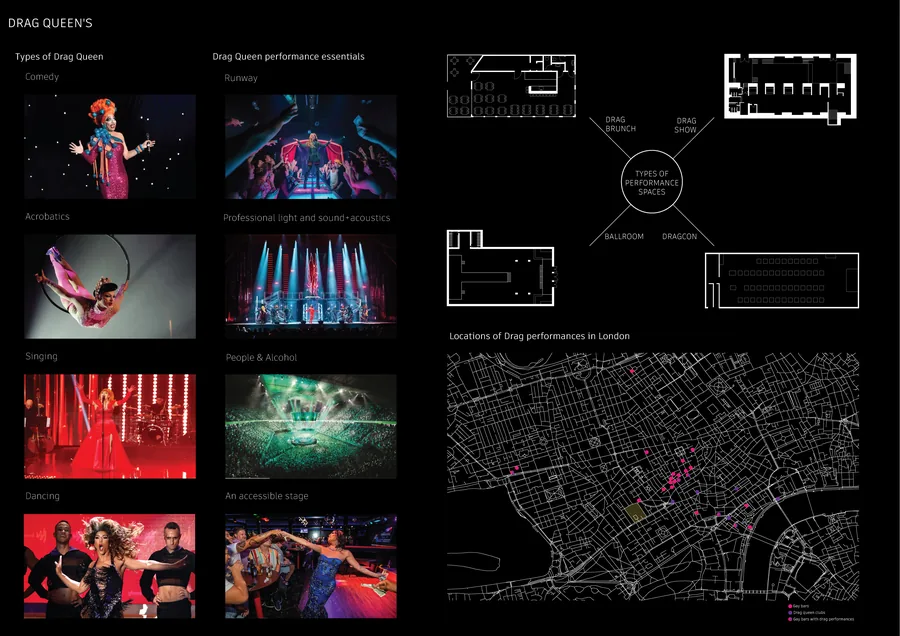
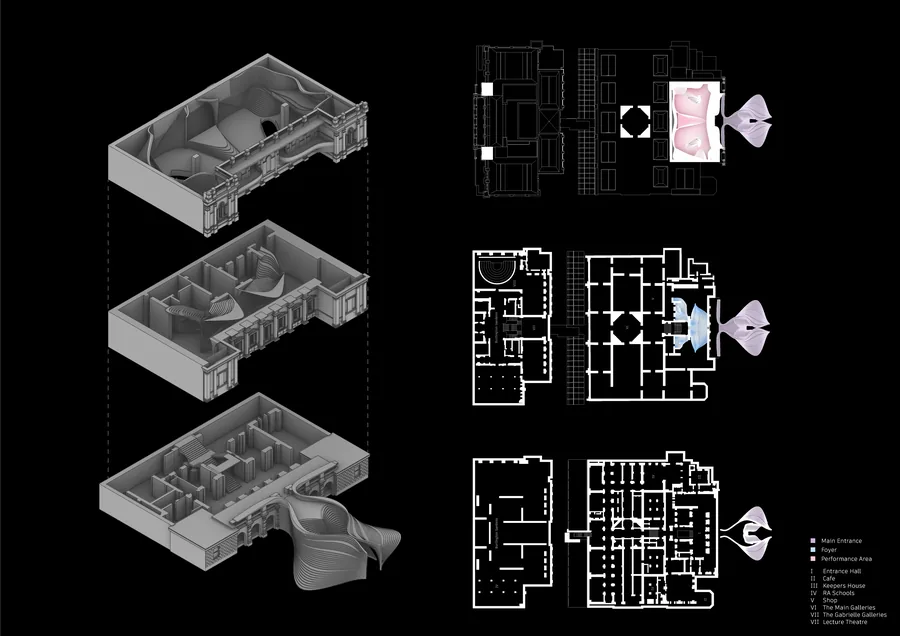
Just as individuals form initial impressions, buildings likewise shape the collective consciousness of their surroundings. As societal attitudes become more inclusive, buildings are set to embody a wider array of aesthetics, enhancing self-expression for both people and spaces. This belief underpins the current intervention that transforms part of the museum into a Drag performance area, offering an opportunity to introduce a shunned art form to a broader audience. The Royal Academy of Arts will serve as the foundation for analyzing this innovative project.
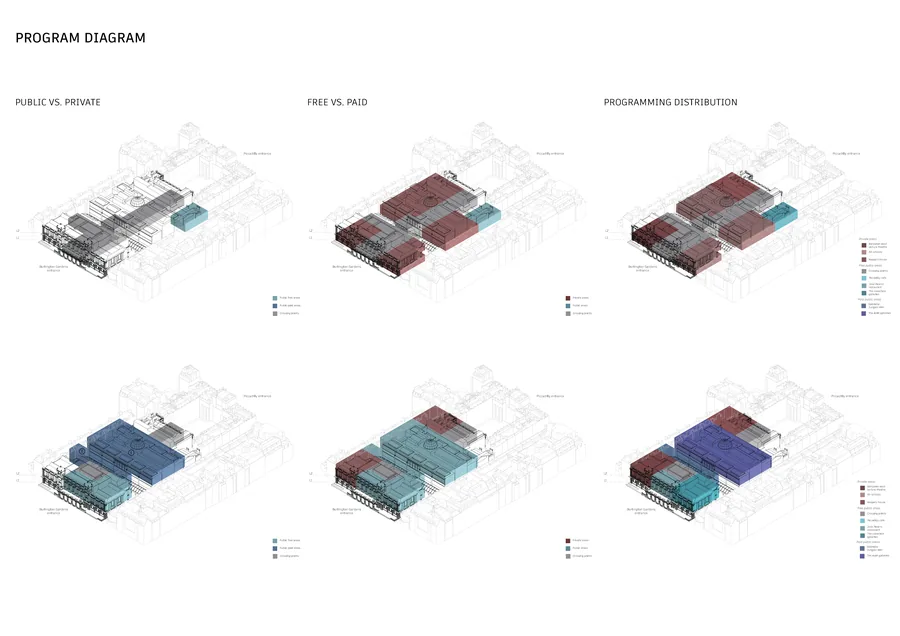
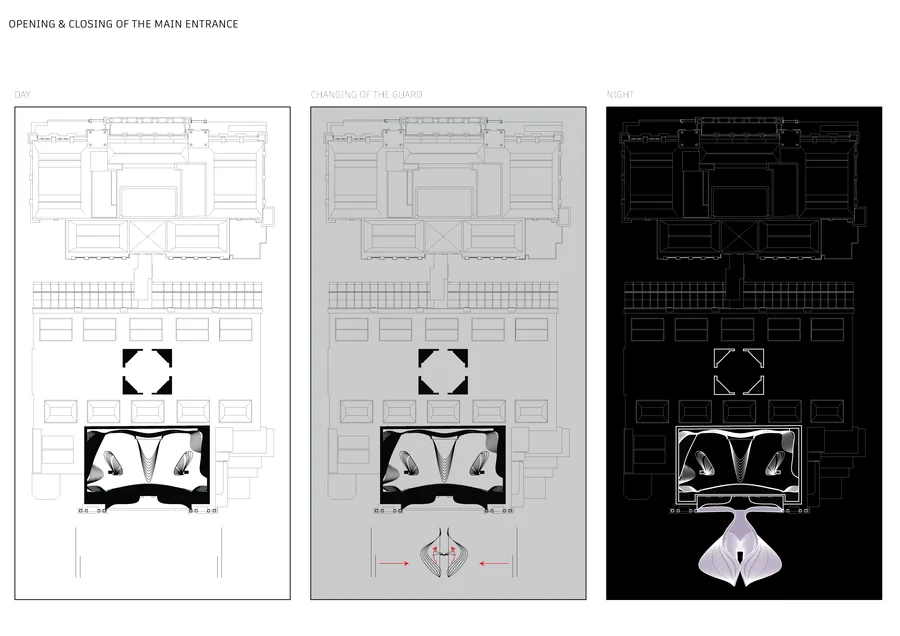
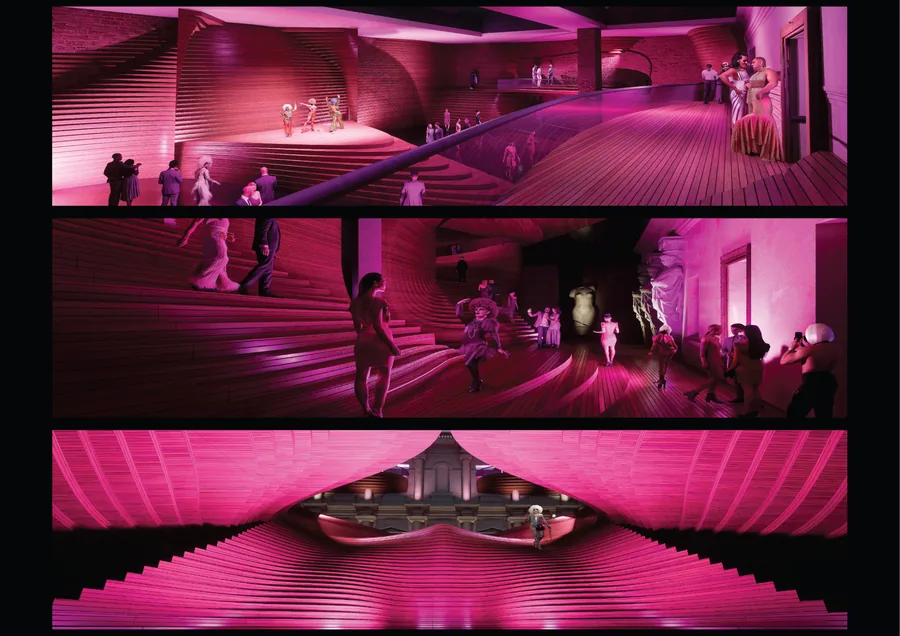
The goal is to introduce and integrate the Drag scene with the museum, normalizing societal outlooks. This transformative structure will serve as a stage for performances and as premises for a gallery, restaurant, and club, with customizable space for all types of Drag existence.
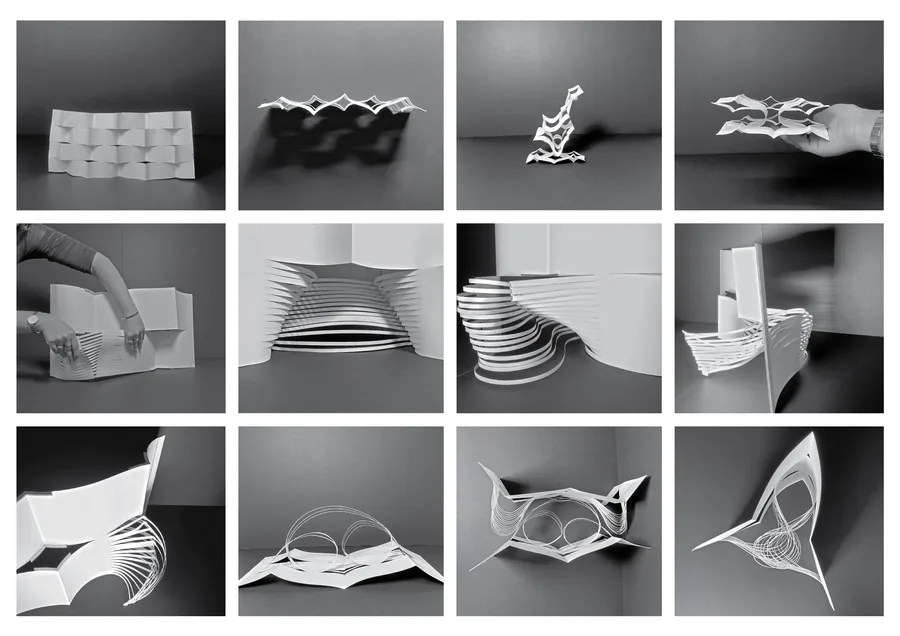
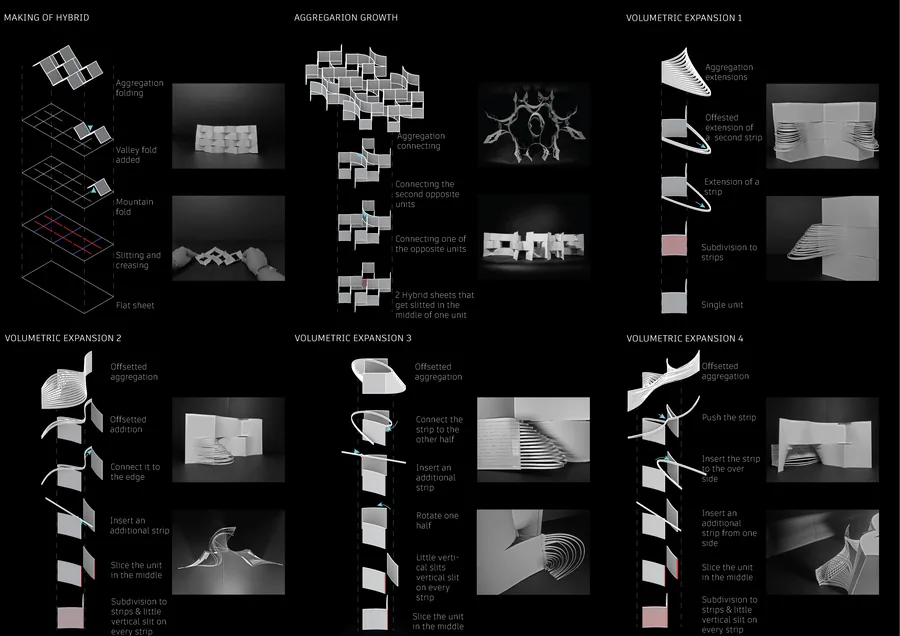
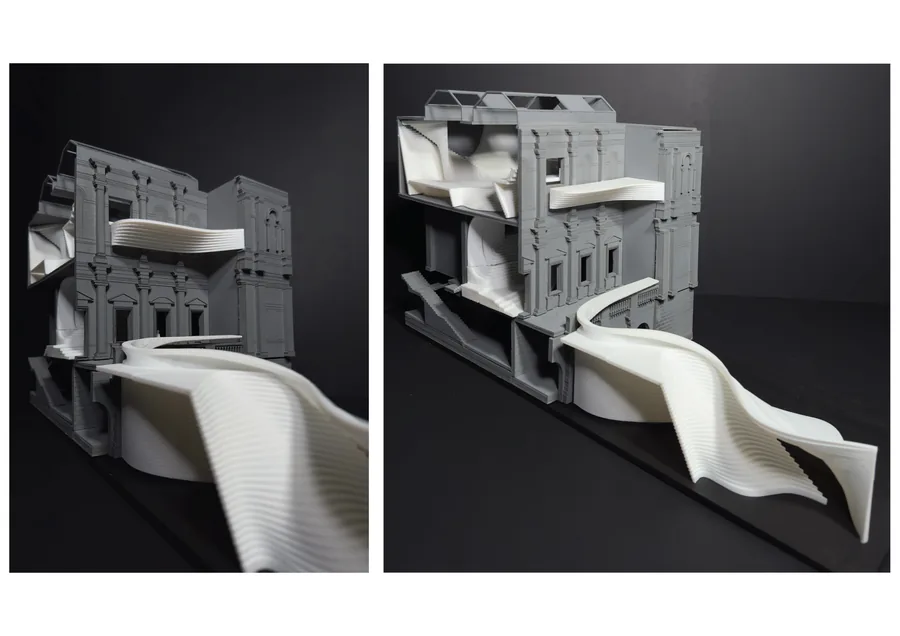
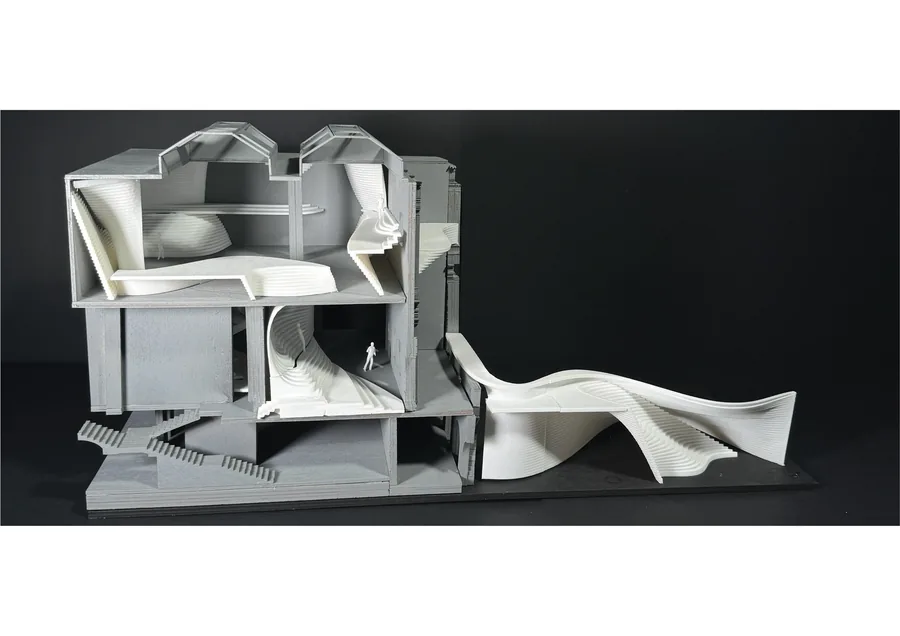
The endeavor involves creating a hybrid system that converts a flat surface into a dynamic, adaptable three-dimensional structure using strategic slitting and folding techniques. This design’s versatility allows for various spaces and functionalities, all adjustable through manipulation of singular parameters. A notable aspect of the project is its ability to revert the hybrid structure back to its original form, achieved through careful fabrication.