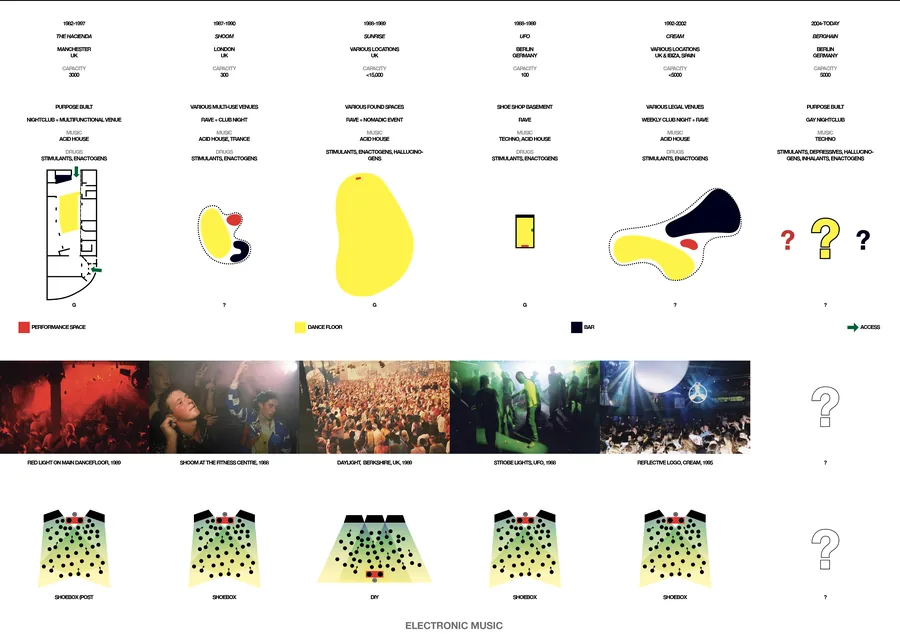
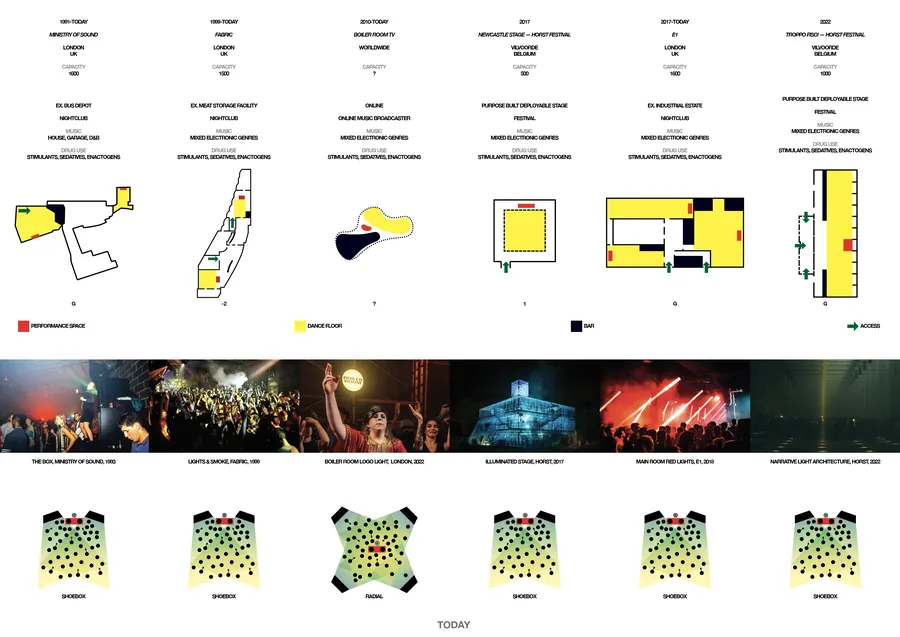
In tracing the architecture of **nightclubs** and their subcultures from the 1960s to the present day, my research synthesises the evolution of these **performance spaces** with a focus on space in relation to light and sound as well as the relationship between audience and…
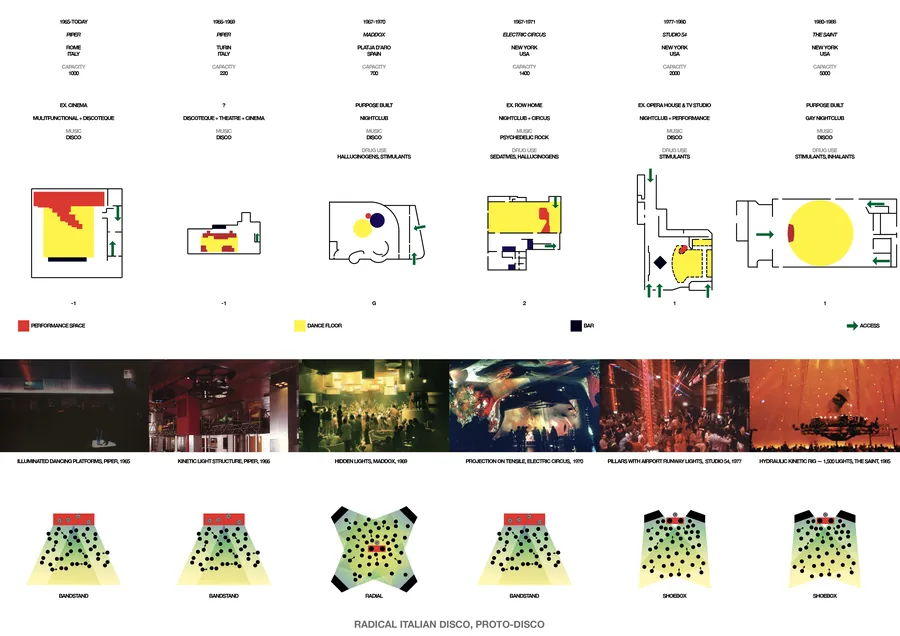
In tracing the architecture of nightclubs and their subcultures from the 1960s to the present day, my research synthesises the evolution of these performance spaces with a focus on space in relation to light and sound as well as the relationship between audience and performer.
The nightclub was once the center of the nightlife scene, but for the last 30 years the number of venues in the UK has been in sharp decline. Nightlife experienced a shift in focus toward record labels in the 1990s/2000s and today has shifted its focus to one person – the DJ. As a result, nightclubs today have dissolved into one-size-fits-all boxes. Boring “mashups of tastes and identities” devoid of unique spatial experiences.
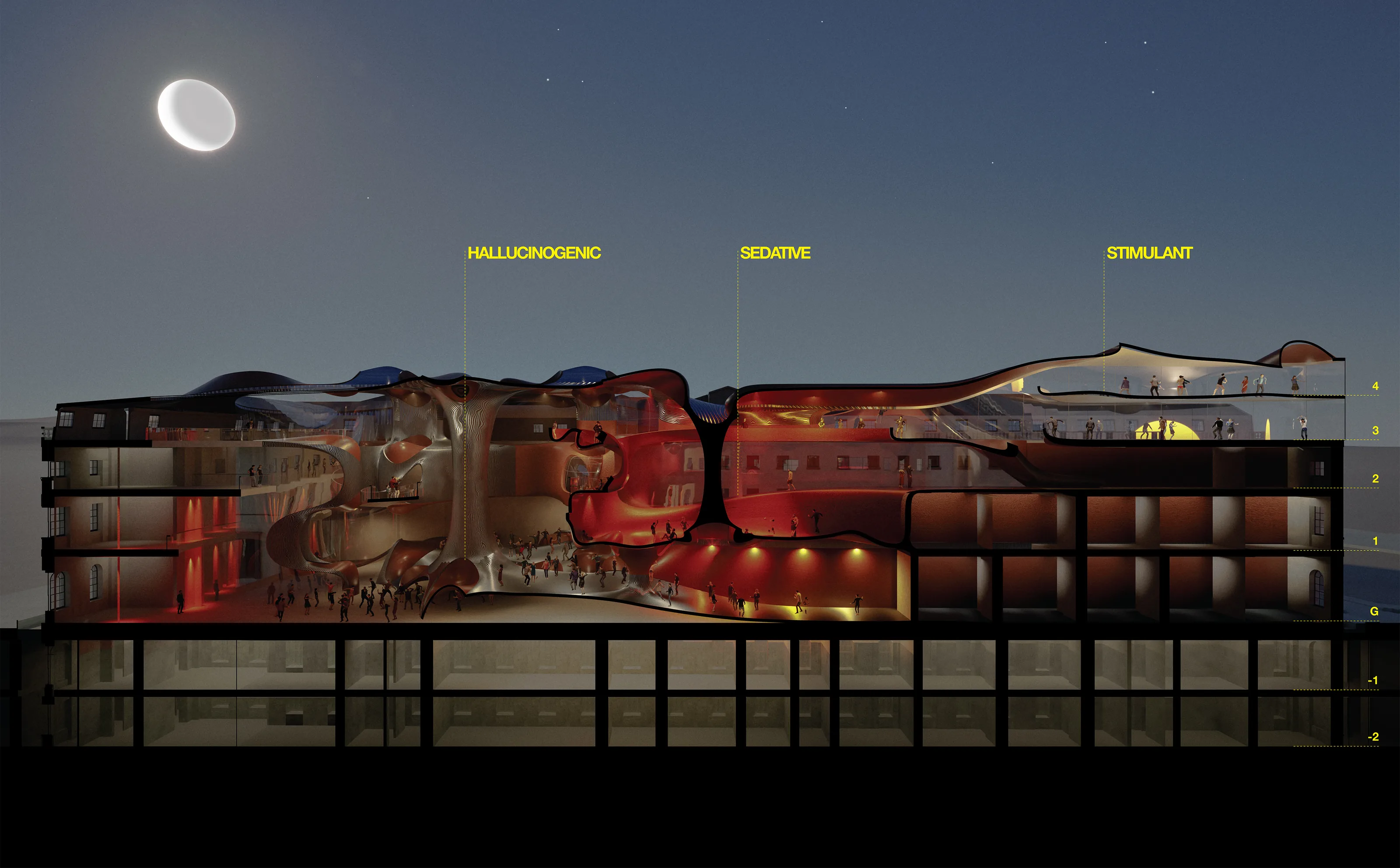
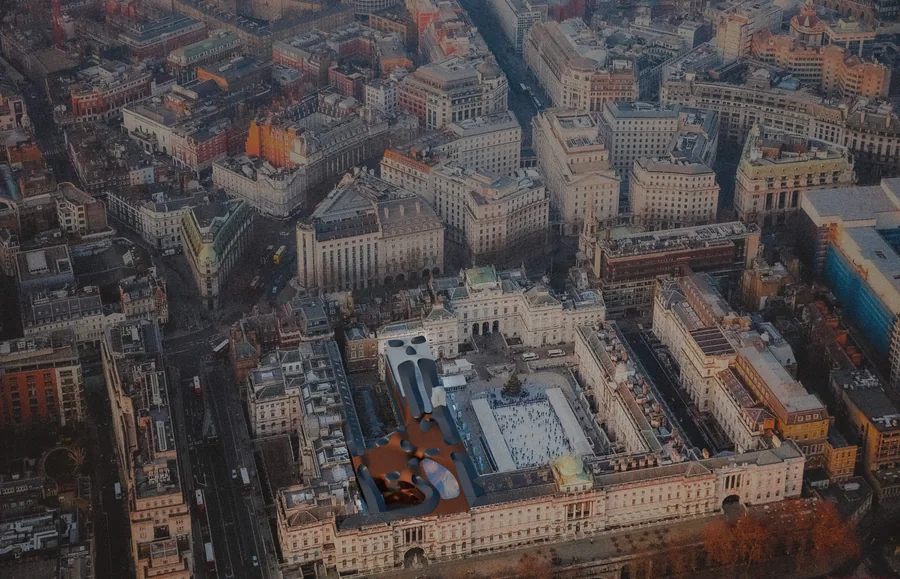
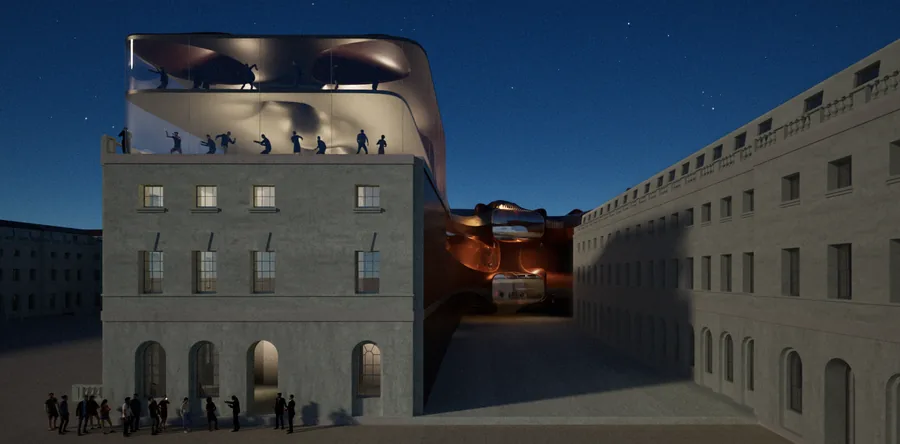
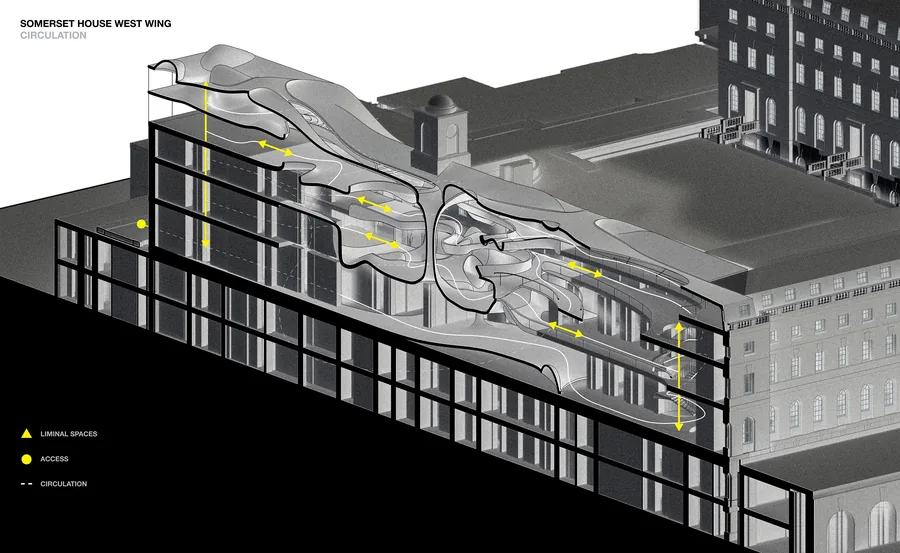
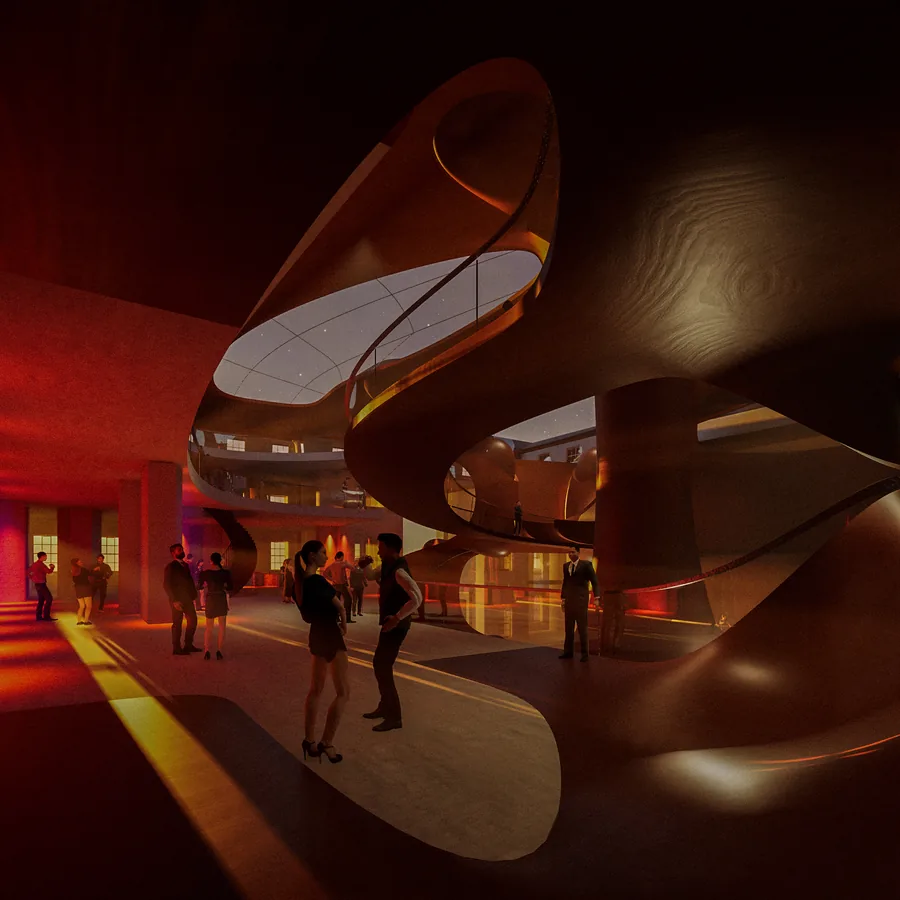
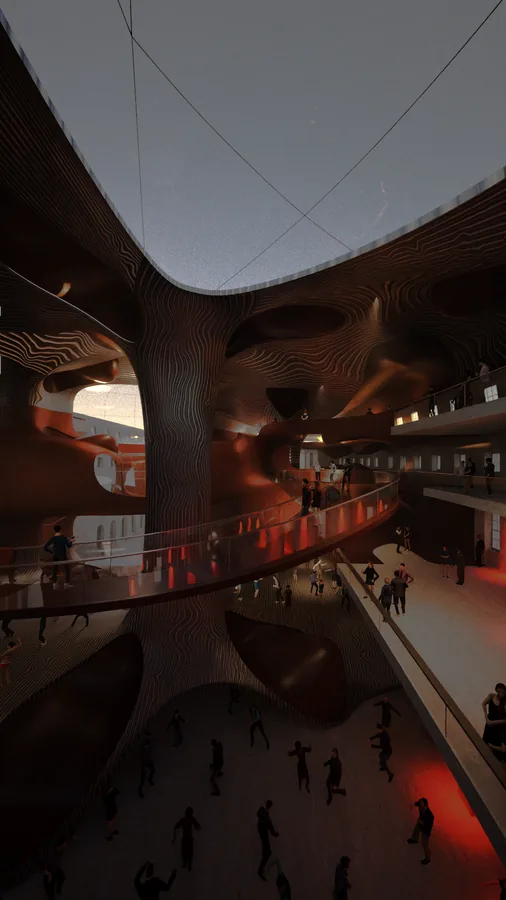
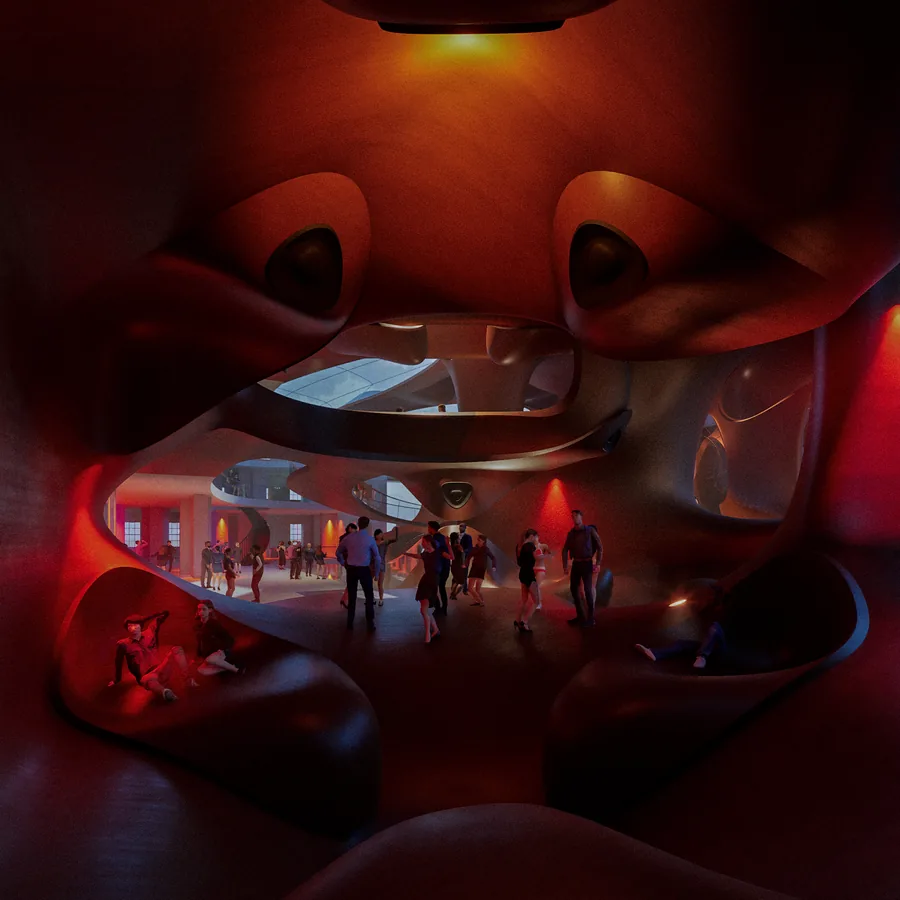
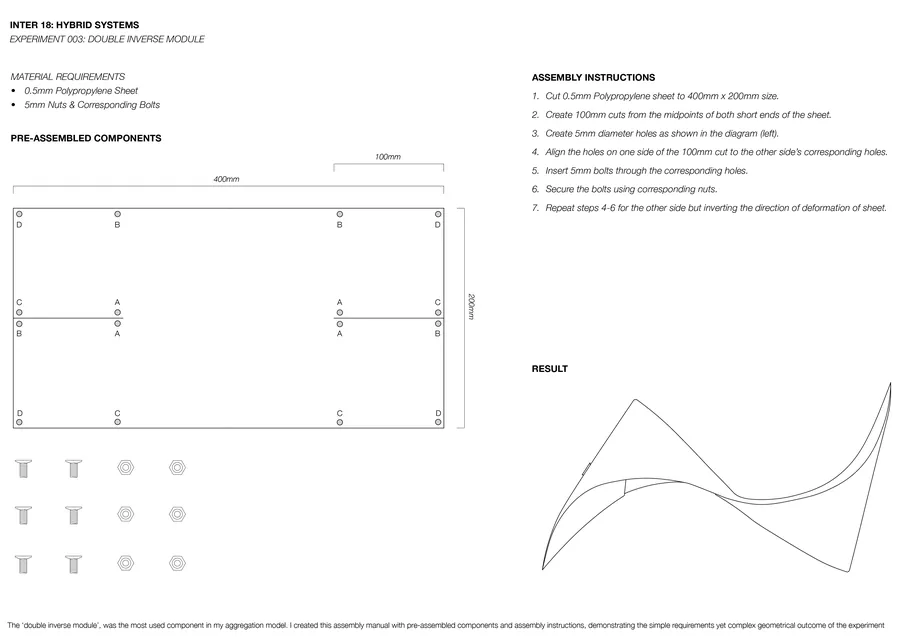
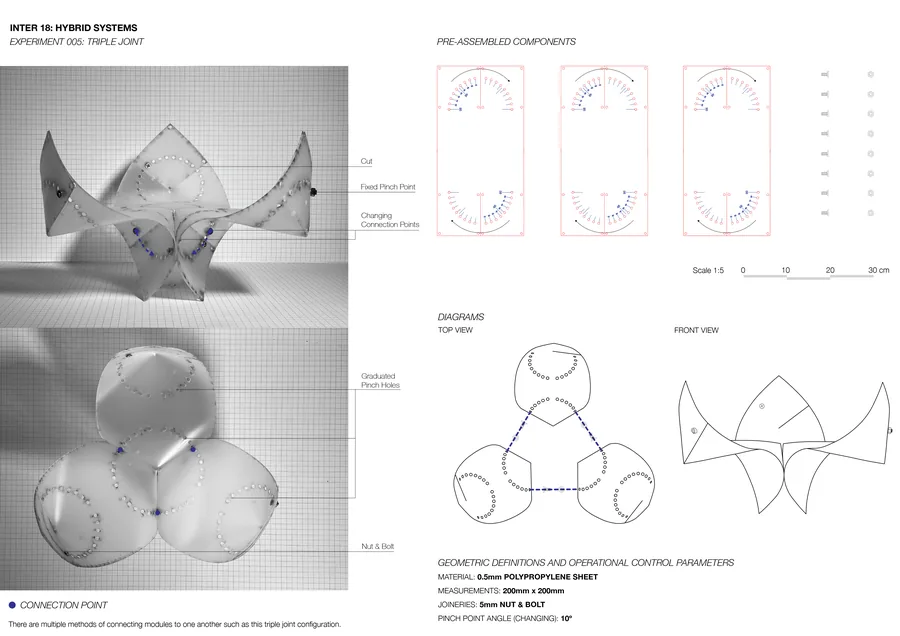
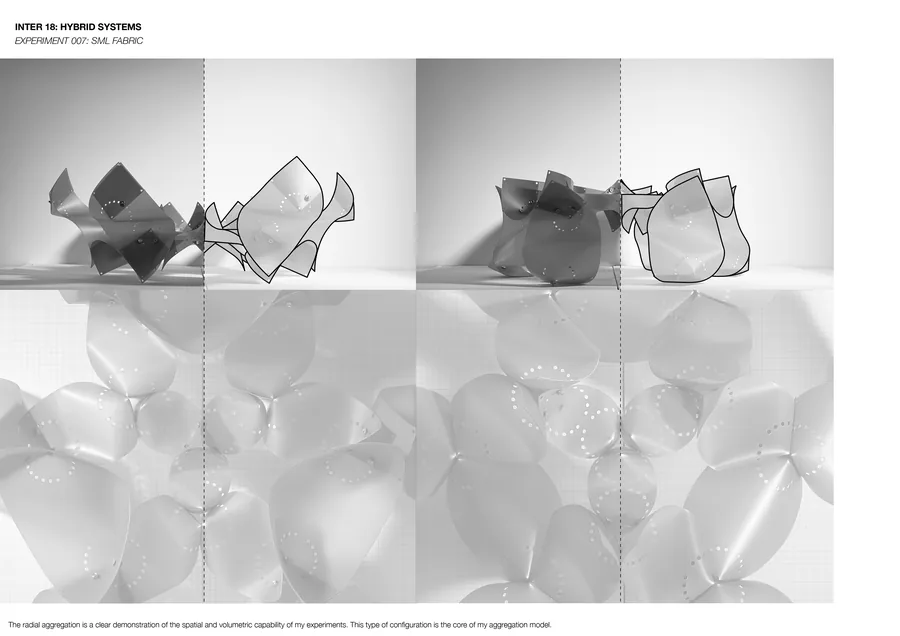
I am proposing a nightlife venue hidden within a prominent cultural institution, the Somerset House. A conventional nightclub today is a space for performative art, where a crowd observes one person. By reconfiguring this space using my hybrid system, the relationship between performer and audience becomes altered.
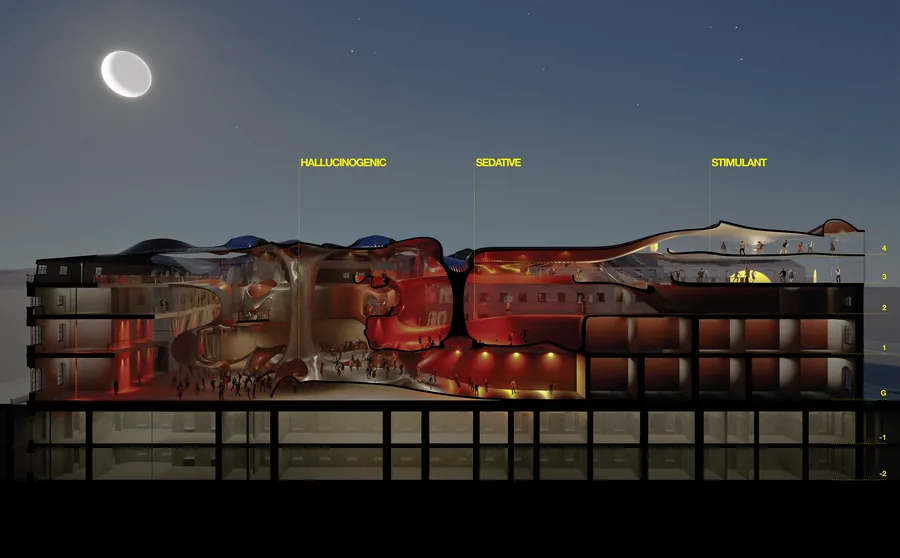
My system will materialize this reconfiguration, by orchestrating 3 spatial experiences: stimulant, hallucinogenic, and sedative. An architecture designed to enhance the experience of psychoactive mediators (drugs) and to simultaneously encourage the audience to become the performer.