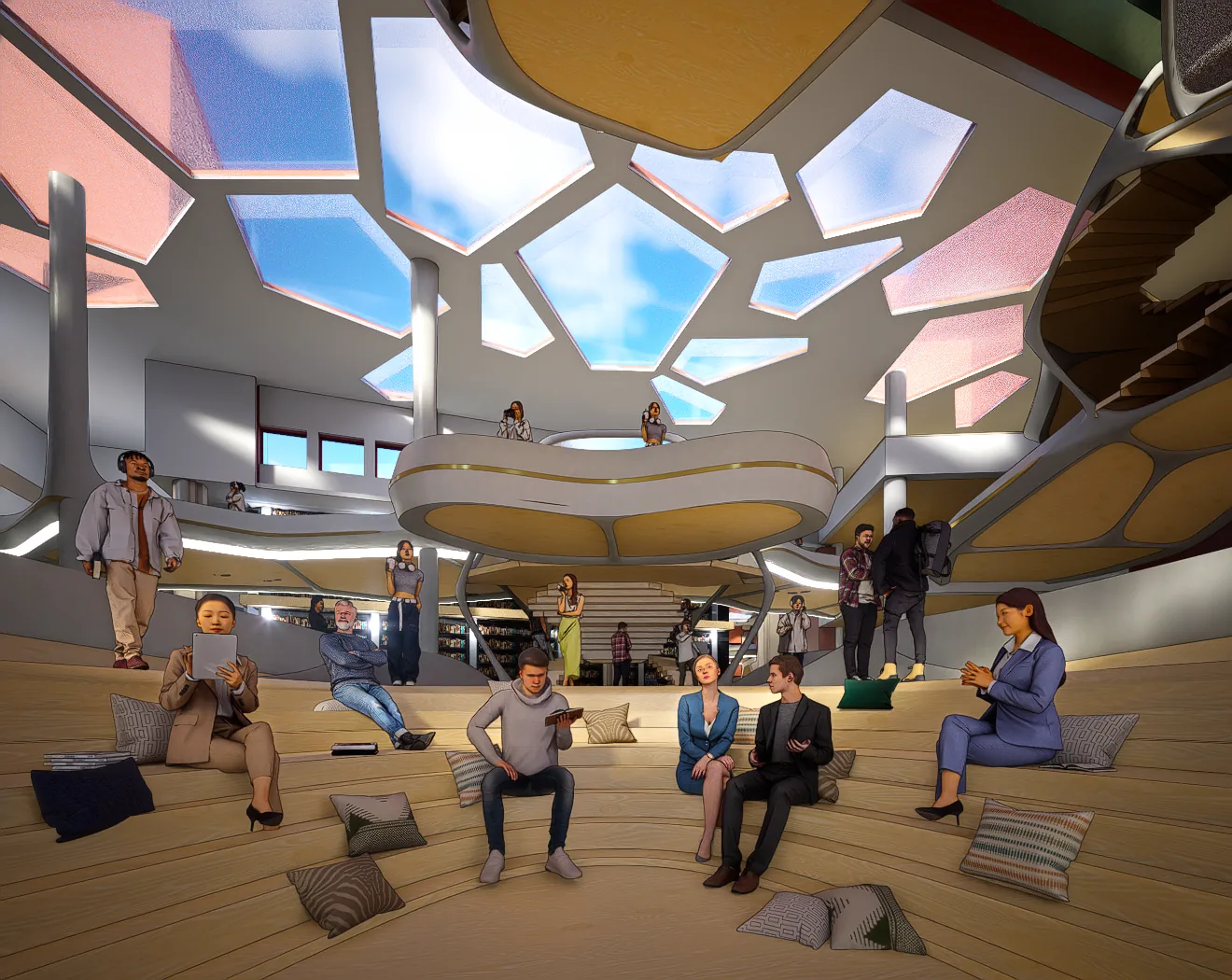
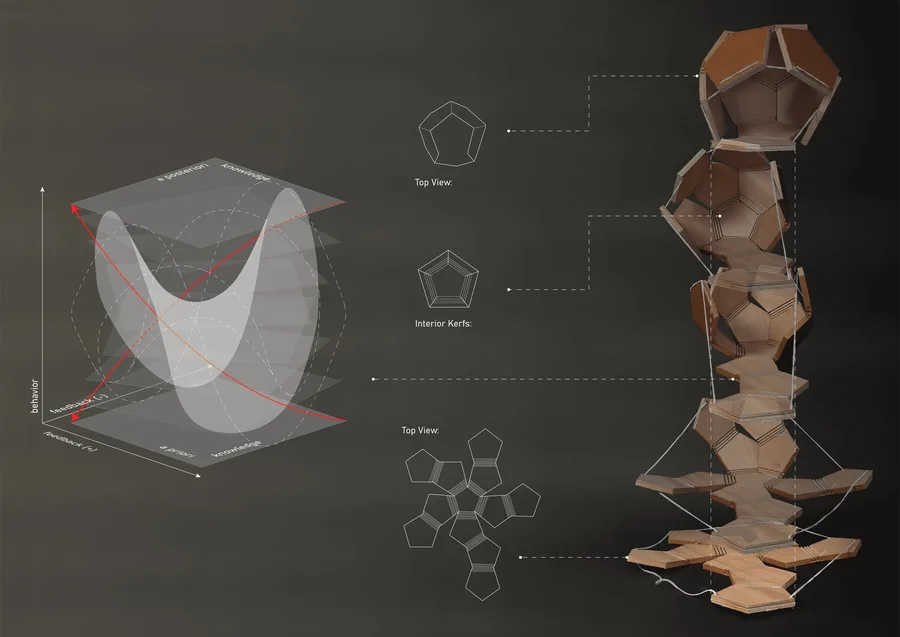

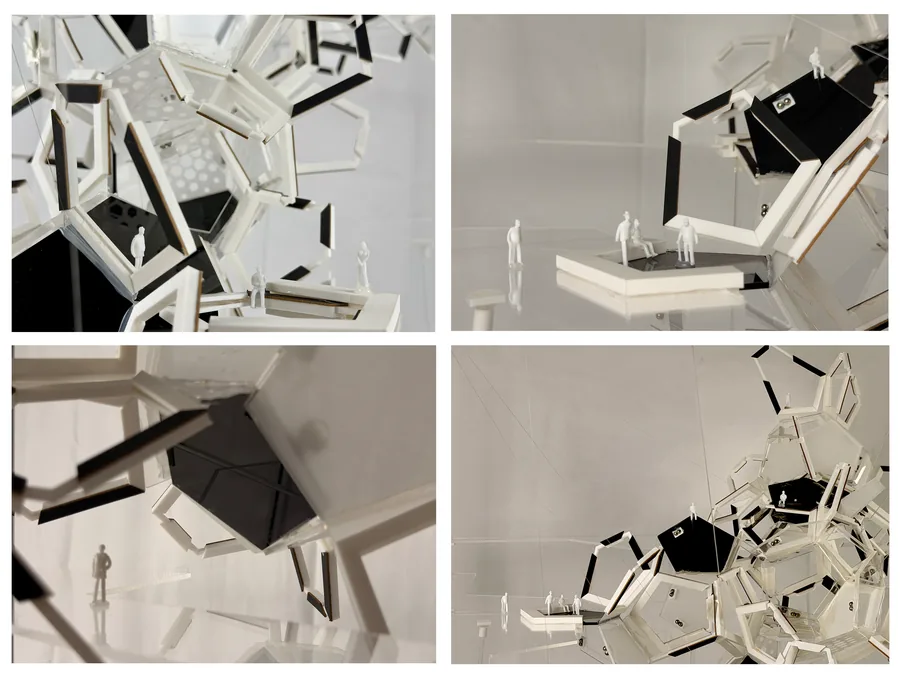
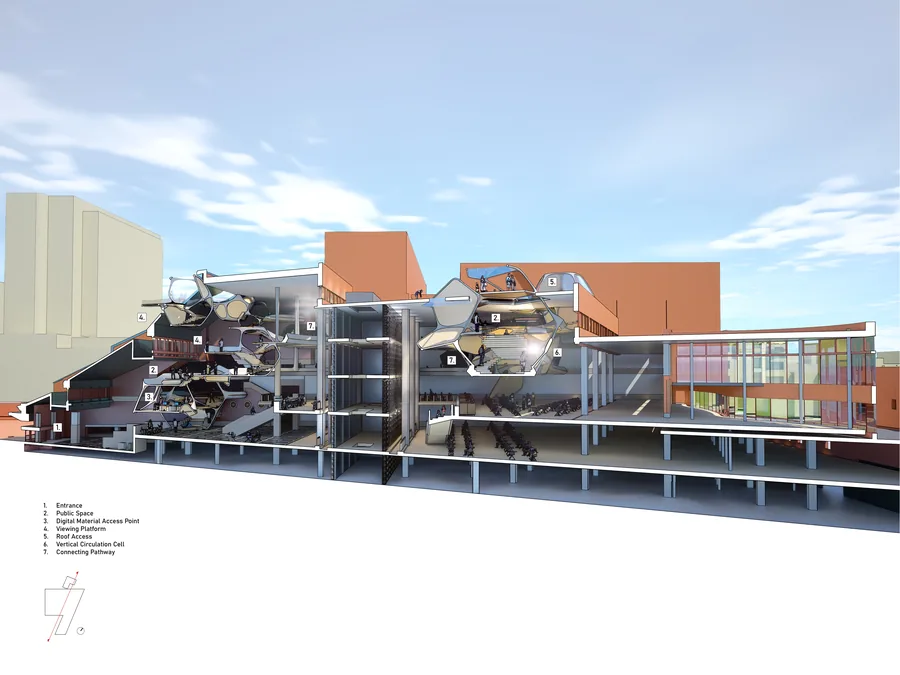
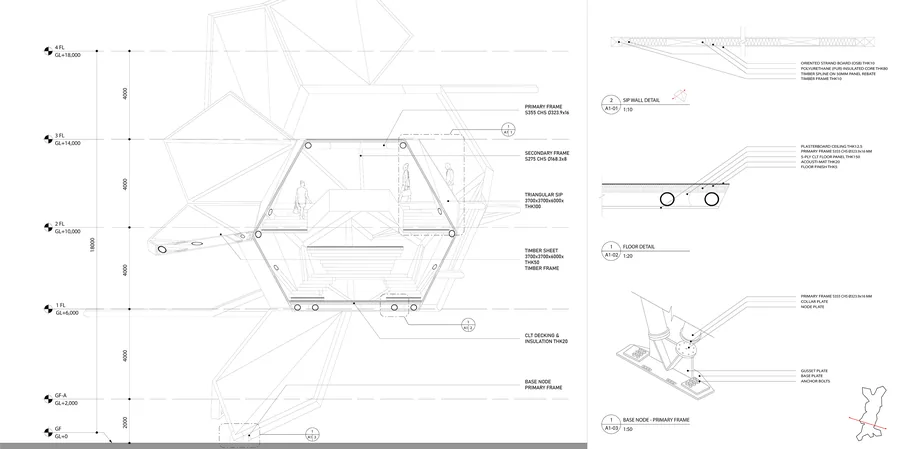
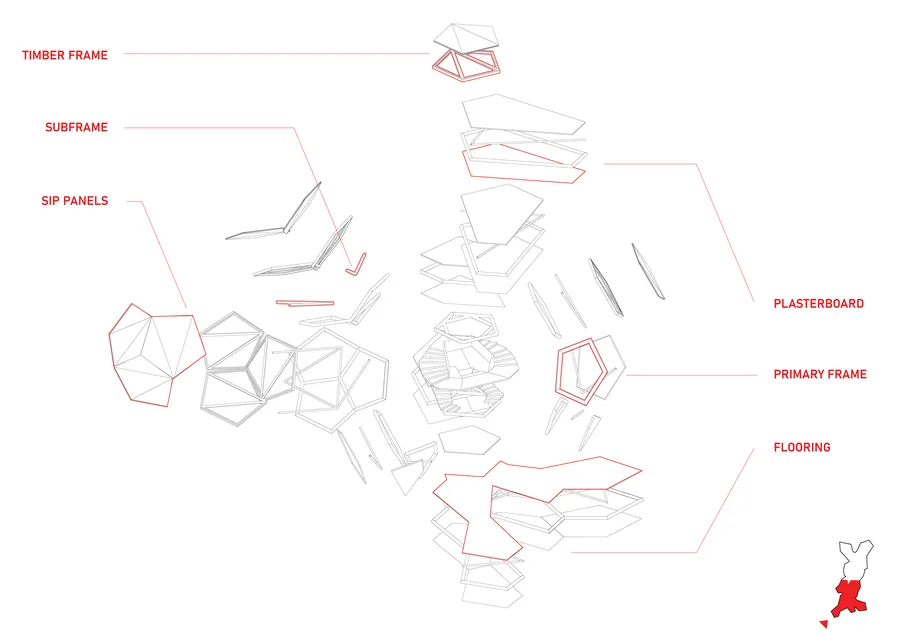
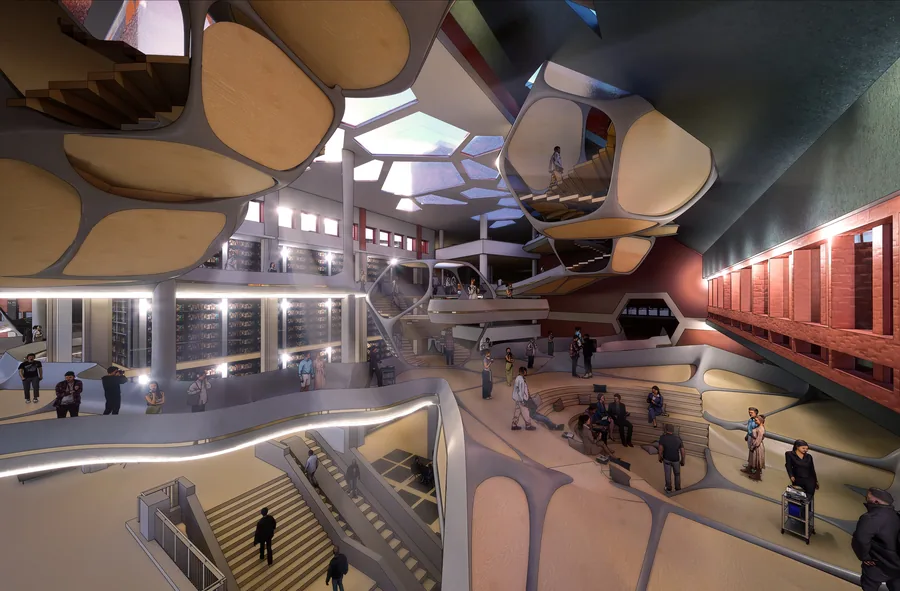
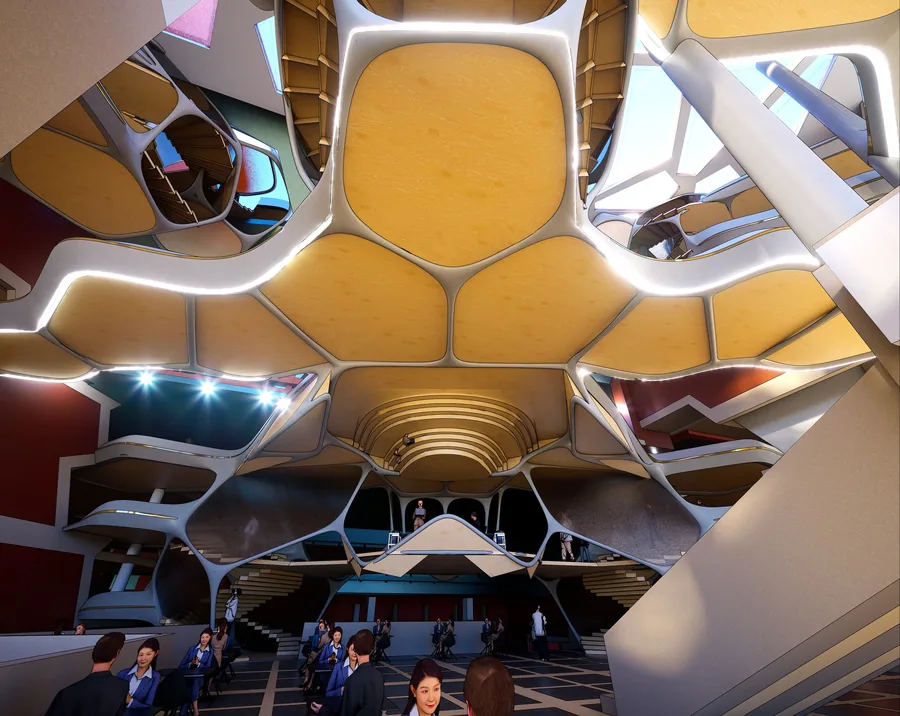
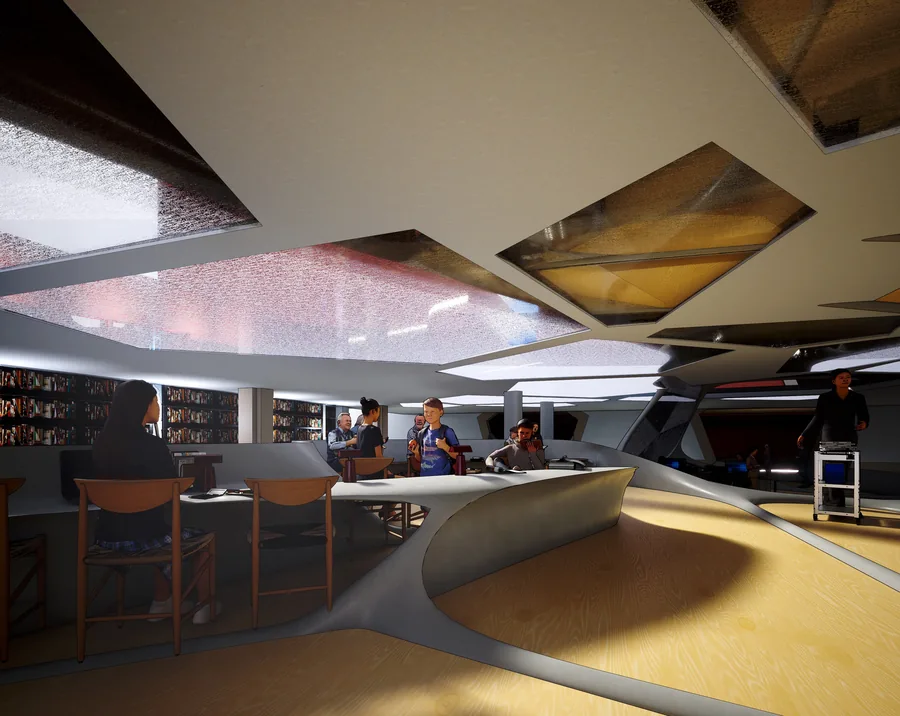
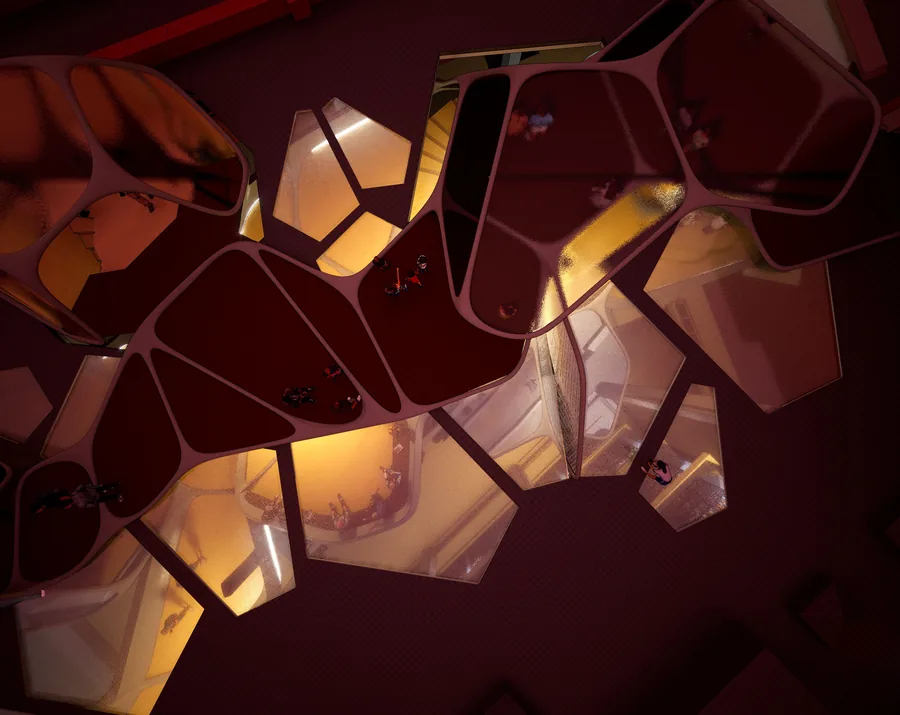
Drawing from principles of biological adaptation and knowledge through feedback loops, this proposal uses dodecahedral fragments able to adapt to a space to respond to the discontinuity of circulation in the atrium of the British Library. It replaces the existing connecting…
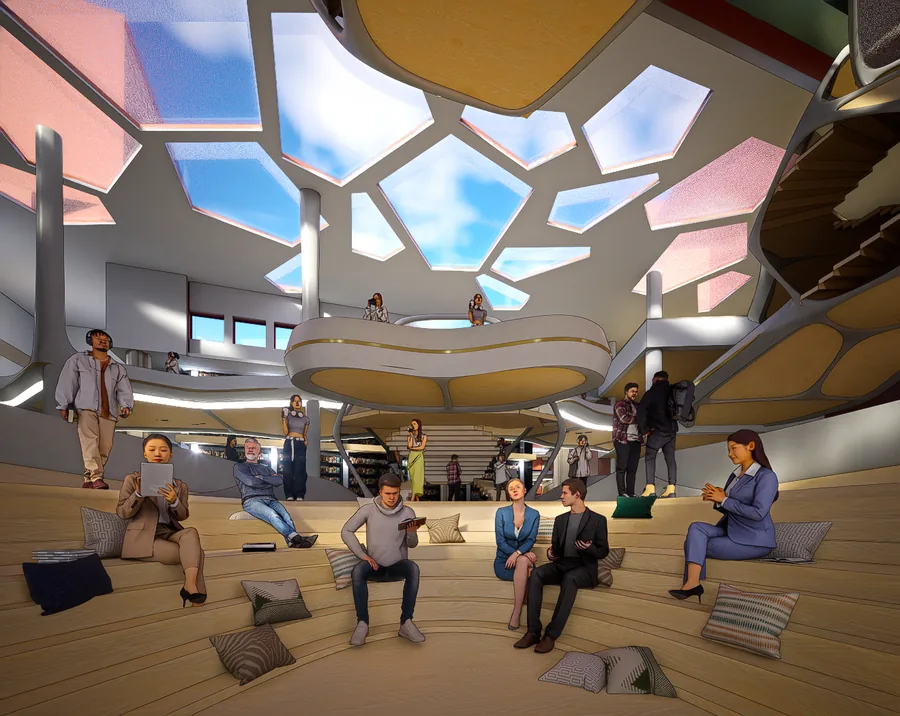



Drawing from principles of biological adaptation and knowledge through feedback loops, this proposal uses dodecahedral fragments able to adapt to a space to respond to the discontinuity of circulation in the atrium of the British Library. It replaces the existing connecting pathways between the East and West of the building to introduce new circulation routes with offerings in between, in order to slow down the direct movement from the entrance to the programme. The system’s public spaces, digital material access points, viewing platforms, and roof access spaces transform the atrium into a space of exchange and shared formal and informal learning, where different disciplines and users intersect. That way, the proposal aims to facilitate the vision of a “Future Library”, of a more variable and interconnected space, responsive to contemporary modes of learning.